Jan 26, 2012 by
David |
Add comment
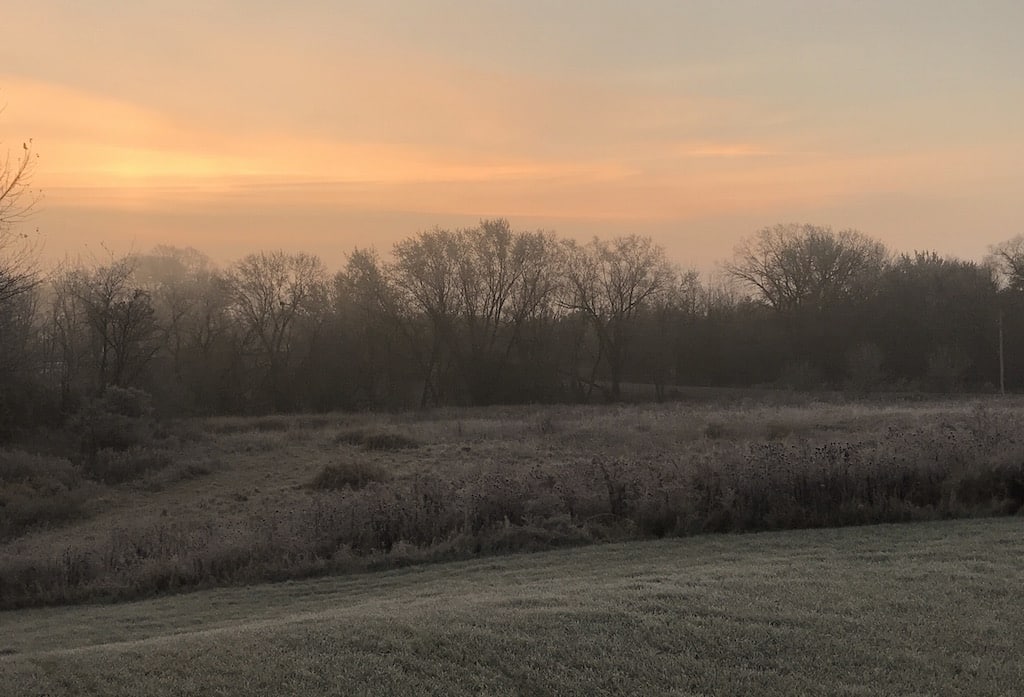
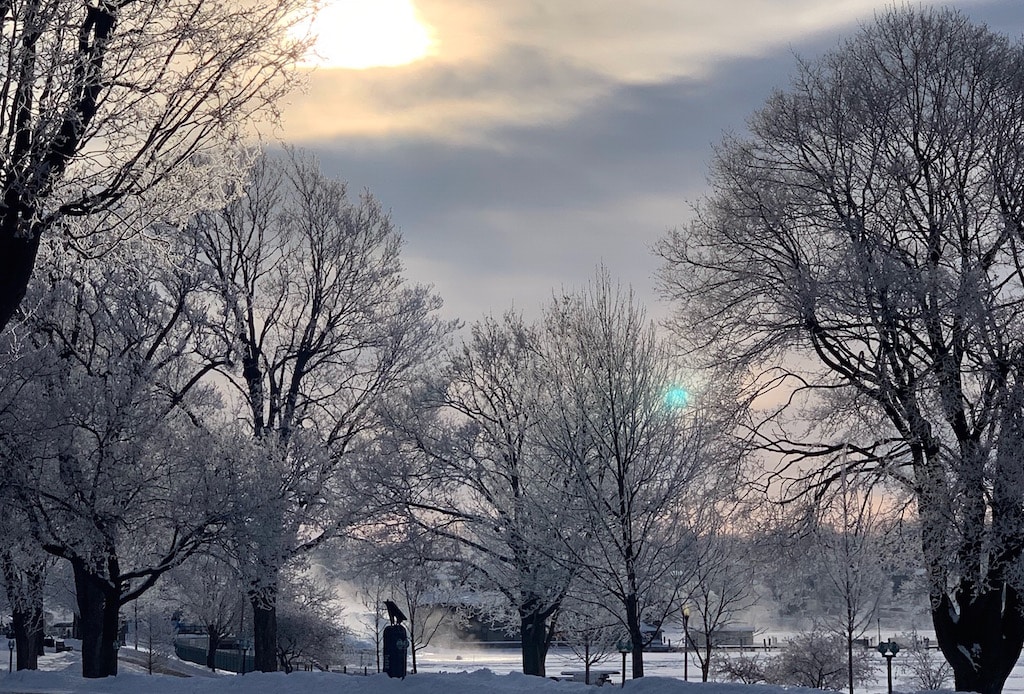
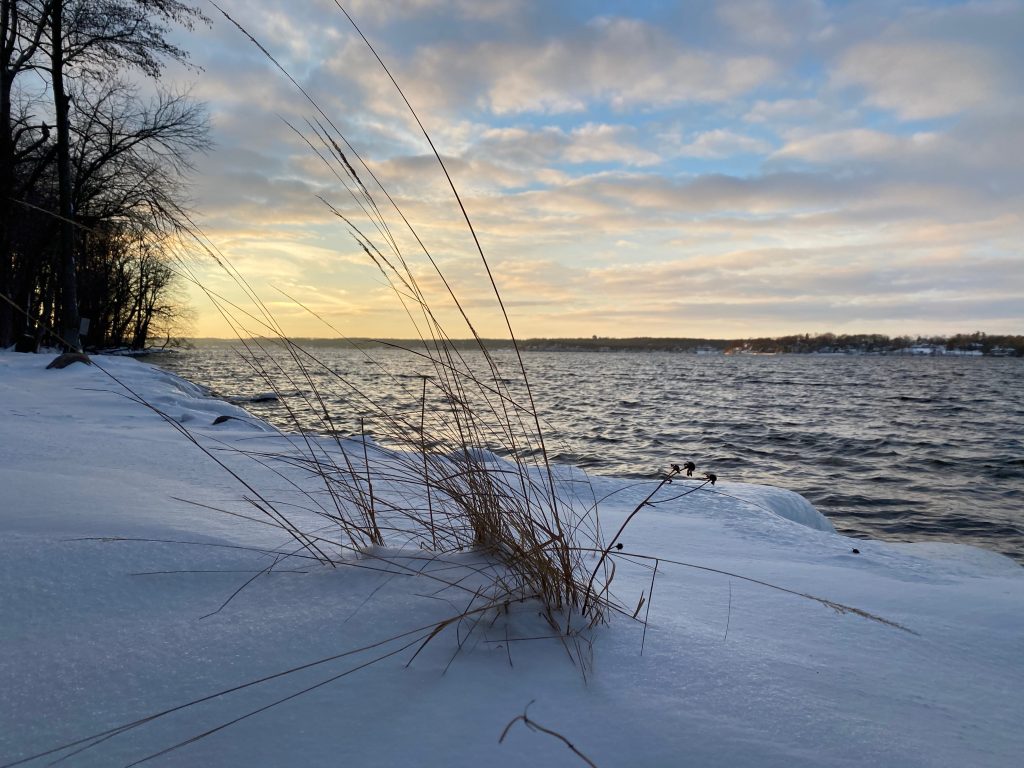
It's dark now, but light enough to see that the sky and the ice and the horizon are the same dull gray. I think he's in there. He has to be in there, even though he shouldn't be. Who would be? Not me. Not you. We are not him, in fact, we are nothing like him. It is dark still, but he's in there. He's either sitting on a white paint bucket tipped upside down, or he's sitting on a folding chair, the kind that stows in a small nylon bag in the trunk of your car or the hall closet, not the kind with woven plaid straps that our grandparents had on their decks, or porches.
He hasn't been in there for long, our friend. Just a week ago there was only water there, and no surface tension could ever hold that wooden hut. When the ice formed one night, he drove by it, as I did. I stopped and glared at that new ice, muttering to myself about its intolerable existence. He stopped too, but he didn't glare at it. His eyes lit up, and likely so did his cigarette, and when he took the first step on it two days later he grew even more excited. He pulled deeper on his cigarette. "Monday", he said. "I'll drag the shack out there Monday". And to celebrate that thought, he pulled even deeper.
And when Monday came he did just that. He dragged that hut out there, maybe by himself, but probably with a friend. His ice fishing friend. I'm sure he has one or more of those. They aren't friends all the time, not in summer or fall, but they are friends when that first two inches of ice bears their weight. When they towed the shack out there on that afternoon many people stopped in their cars to watch. They were watching, waiting. Wondering if those two friends and their wooden shed would make it to where they were going in. How far were they going to go? Is there enough ice? Are they fools? This is what people were wondering, every one of them. The answers to those questions wouldn't be known, not by those people in their cars. Even by the two friends only the answer to the first question was known.
They pulled that shed, and they got hot when they were doing it. Sheds slide easily on ice, but if they hadn't strapped on their ice cleats, the ones they got in their stockings four years ago this last Christmas, they wouldn't have been able to push and pull properly. It's a traction issue. Even so, they were getting tired. It was cold out, but not so cold that they didn't sweat. When the shed was close enough to the place where they'd fish, to the place where they always fish or to the place where they once fished and caught more than one fish, then they stopped pushing. If they kept pushing, gliding and scratching over deeper and deeper water, more people would have gathered in their cars and more questions would have been asked, even though the
question repeated would have been one that was already asked earlier, by one of the other people. Are they fools?
Once the shed was where it needed to go, the two friends went inside. They took turns drilling holes in the ice. Probably two, but maybe three. They tipped their buckets upside down, far away from the day when they first opened those buckets and they were full of paint. The color was wrong, but that doesn't matter now. If they didn't tip their buckets upside down they did slide their chairs out of the nylon sleeves and set the chairs close to two of the possibly three holes that were just drilled. There isn't much ice down there, but there's enough. Water pushed through the holes and covered that thin ice.
They probably caught blue gills on that first day. They went out yesterday too. And today, right now, this early on a foggy January morning, they're probably in there, Fishing, talking, smoking. The heater that they brought with is on, and they're warm. They know that people are still stopping on the side of that road, wondering what those people are doing in that hut. Are there even people in there? Is there enough ice? And if there are people in that little wooden shed, the one that one of the friends made eight years ago out of leftover plywood and 2 x 4s from his neighbors addition and mismatched nails that clung together in a red and rusted coffee tin, are they fools?
I know one thing. I know these friends are not in that hut sending emails to clients. I'm sure of it. I suppose there's no way to know for sure, from this distance and without binoculars, but I'm pretty sure. If this curiosity absorbed me and I raced home for a binoculars and returned to the shed later when the sun was higher, what would the other people in their cars think? Why would I need to know what was going on in that hut? Is it really so important whether or not one of those friends, or both of them, are emailing someone from their phones? There's no way they are. They're just sitting on those buckets with their propane heater blowing too hot, and a pile of blue gills mounting on the ice on the other side of their two, maybe three, holes. There still isn't much ice down there.
Soon the ice will melt. Foggy mornings will be more common, and the late morning winds will blow and they will push the ice against itself. It has no other choice, and ice will crush ice and soon enough it will all be gone. The two friends won't be there anymore, because one evening some time not far from now they'll have to leave their homes late at night to push and drag that shed to the shore. The smooth ice will be slush then, and the only thing people will see as they stop by the side of the road is the sporadic flicker of their flashlights that will slowly, but surely, grow brighter as they near the shore. People will stop their cars, drawn by that nearing
light and they'll wonder, are they fools?
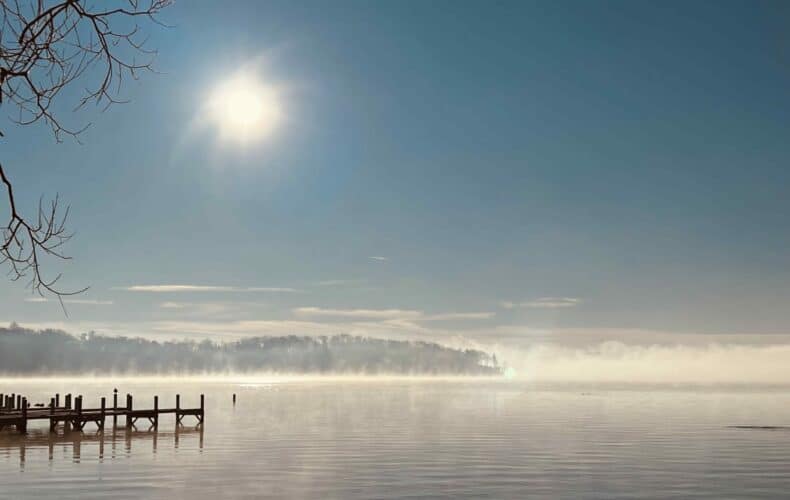
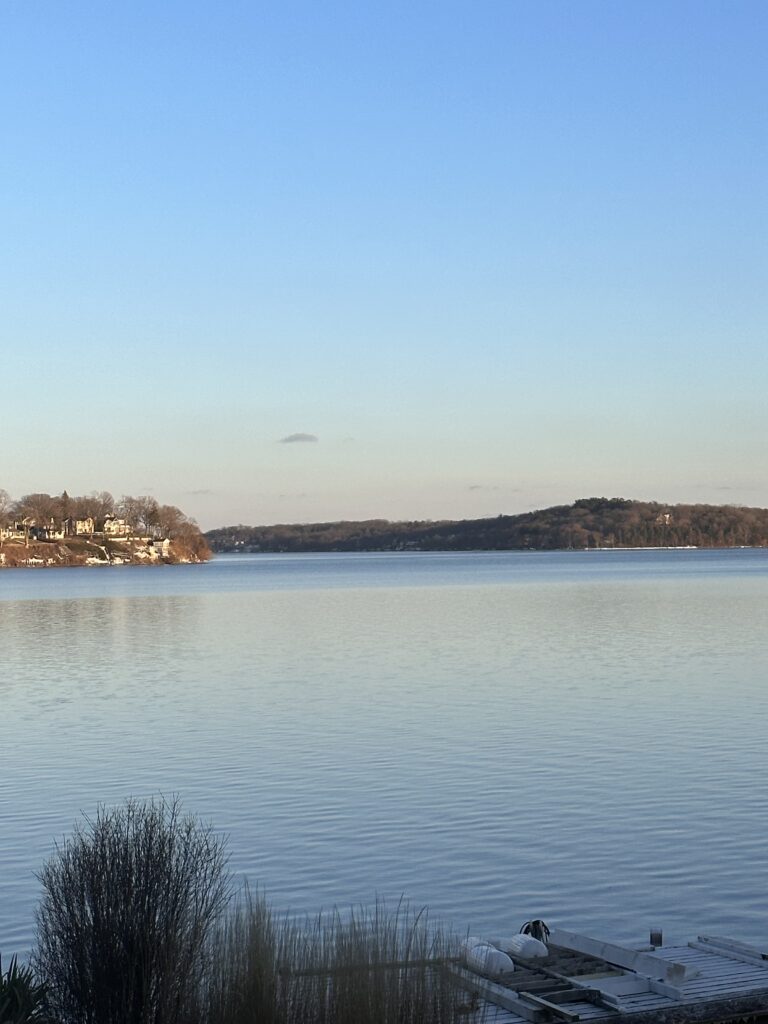
(I hate that I have to do this- I don't know the guys in the hut. I tried to photograph the ice shack on Geneva Bay but I couldn't see if through the fog. This is fiction, not fact. Like Tim Allen's Michigan commercials and those Michigan billboards.)
Jan 25, 2012 by
David |
Add comment
It doesn't really matter if you're a liberal or a conservative, odds are you still care about the value of your real estate owned. No matter what planet Joe Biden originated from, or how much time Jon Boehner spends crying in the tanning salon, both men were sitting on that stage last night wondering less about what drivel was going to be uttered next and more about their neighbor who just listed his house for $100k below where it "should be".
I mean, who would list their house that cheap? Do you have any idea what it's going to do to the value of my house? I'm never going to be able to sell now! This is what they were both thinking. Joe Biden also thought lots about space invaders, but that's just because it was Tuesday.
If the value of our homes is so important to us, it's obvious then that the only thing we differ in is how to hold up that value, or in the case of today, restore it. I realized last night, in the midst of that explosive bout of nonsensical, verbal diarrhea, that my market isn't a market that the president is concerned with. The market that I cater to is far less important than the market that the president wishes to pander, err, cater to. If you're reading this, and you're concerned about the value of your Lake Geneva property or the value of a Lake Geneva property that you may one day wish to buy, don't be confused by the message from last night. You, my friend, are of no concern to this administration, and neither is your real estate.
Now that's not entirely true, as you are a big part of the plan. You are the funding vehicle for the plans that are aimed to help anyone but you. You may, in fact, pay a lesser effective tax rate than your secretary. The shame. But if you are concerned only about tax rates, consider the fact that the average income tax rate for the top 1% is 24% while the bottom 50% pays just 1.85%. All of this concern over rates and no mention of actual dollars and cents. Those individuals who pay the most into our taxation system are also those individuals who receive the least benefit from those confiscated dollars.
But Dave, don't you enjoy driving on roads? Of course I do. That was a stupid question. All but the most Ron Paul of us agree that paying taxes for basic infrastructure is a necessity, which is why tax proposals that are deemed the most severe and radical still call for Federal taxes to be rendered. This isn't about a desire to pay no tax, it's about the desire to cut Federal spending so the economy can be stimulated the old fashioned way: By rich people buying expensive stuff.
Our president believes that a high earning individual earning $1MM per year is too rich. He would have you believe that this individual is a hoarder of wealth, someone so rich and vile that they cannot possibly care for the lesser among them (easy to say when he's the one who gave just 1% of his income to charity in 2010). For this reason, it seems reasonable to this president to ask for a paltry 5% increase in this personss taxes. That's on top of the 3%+ surcharge phasing in soon to help pay for Obamacare. It seems reasonable, right? 5%? Such an insignificant amount. Hardly anything at all, really. Barely a drop in a very big gilded bucket. Unless, of course, you live in the real world where a 5% increase in tax due just laid claim to the money that you earmarked to pay the property taxes at your new lakefront house at Lake Geneva.
Ah, but Dave, you're wrong again. If you're really that rich, and you only have to pay an extra 5%, you can certainly still afford a lake home. Can you? Really? Something that most pundits and perhaps economists miss is that luxury purchases are not always driven by actual liquid wealth, but by that wealth perceived. If I am rich, which I am not, and I have to pay an extra $50k this year in taxes, it is true that I will still be rich. But if I feel even the slightest pinch from that increased liability, am I likely to go out the next day and spend more freely than I did before the hit? Of course not, and this is what the liberal does not understand.
Much of this confusion stems from the belief that the wealthy are not alpha consumers. I've written about this before, but it bears another mention. The wealthy do not hoard wealth to the degree that most might think. The wealthy drive this economy, and supply side economics are alive and well if only you'll consider this little 5200 acre lake that you obviously care about. If a prospective buyer feels a pinch from weighty rhetoric about pending tax increases, or from a general verbal assault on wealth, or from actual tax increases themselves, there is a high possibility that such a feeling will stall the purchase of a vacation home. If that purchase is stalled, liquidity is robbed from the market, and the normal trappings of a sale vanish. That new patio set? Unsold. The landscaping project that the local landscaper had planned on to make his next month's mortgage payment? Nixed. That commission that the broker was planning to use to upgrade his wife's aging car? Gone. The impact on a local economy because a politician is so detached from economic realities that he cannot connect the dots? Enormous.
And then there's the issue of tax rates. If a wealthy individual, say a guy named Mitt, pays 15% on his inspiring 2010 earnings, is such a rate cheating the government out of money that it really needs? Is $3MM in tax paid on assets that were likely already taxed once not enough? I suppose that depends on whether or not you believe that they government will use that money to help others. But help who, exactly? The same people that Mitt tried to help by giving millions direct to various charities? Those people? Now let's think about which money was more effective at helping those unfortunate among us. The government money that helps people get lots and lots of free peanut butter, or Mitt's money that went direct to the source of the need? Are these rhetorical questions helping, or are some people still struggling with the answer?
I suppose it all comes back to Lake Geneva. This is a market that the president has no concern for, up or down, volume or none, no matter to him. Whether the greedy rich succeed or fail is of no consequence, as the voting block that the rich make up isn't enough to swing an election in either direction, ever. Populist jargon works on a weak minded public, and I suppose it's our fate to forever be a market, comprised of individuals, who will continue to contribute grandly to the excess of government while receiving little coddling in return. That minor 5% surcharge the president wants? Before you deem it to be a reasonable request, just search for the answer to this honest question: For each tax increase, no matter how little, how many would be Lake Geneva buyers take a step back, take a deep breath, and decide their own dreams can wait?
Jan 24, 2012 by
David |
Add comment
Dear Friends, Clients and Future Clients, Lake Geneva Lovers, and Honored Guests who have arrived solely by the amazing grace of the Google Algorithms, which we'll assume you used because Bing is only really good at maps and not searches,
At first glance, there appears to be no constitutional precedent that would mandate that I give this speech to you today. There is no decree, and no higher authority that has directly dictated that I stand here, sporting my finest, if tight, jeans and the cleanest collared shirt I could find, for no other purpose than to update you on the status of the vacation home market that each and every one of us hold dear. I would say to you today that if you do not hold this market dear, then you should leave the chamber without further interruption. No, my friends, this is not a speech that I have been squarely forced to give. I stand here today, 121 days from the start of another glistening Lake Geneva summer, humbled to be your servant-savant, it is my distinct honor to proclaim to you that the state of our market is strong.
The Declaration of Independence, a document signed by 56 men, many of whom were later targeted by the British for their treasonous actions, sought to promise their fellow man three core, tangible beliefs. Those being, in no particular order: life, liberty, and the pursuit of happiness. It's that very pursuit that has led men, women, and children to the shores of Geneva Lake for centuries, and it's that pursuit that will keep our market strong both during good times and bad. The year that has passed was not uniformly benevolent, as many segments of our market continue to suffer through a nasty bout of real estate illiquidity that may or may not have originated in Michigan. In spite of the pockets of resistance, the Lake Geneva market pushed forward, and claimed 2011 as a year of prosperity and celebration, even as other similar markets languished in their own individual squalor.
The long odds that have stacked against our continued success include elevated unemployment figures and an unfortunate resurrection of populist baloney. This past year we heard those cries of the ninety-nine as they chanted and banged on bongos and blamed the one for usurping the wealth of the whole. I'm stand before you today as the leader of the entire market, but it is indeed a market meant for the one percent. This may shock you, but I do not mean this to be the one percent of financial consideration, rather the one percent that has the discernment to call this magical land of Lake Geneva their weekend home. This is not a one percent born with the most silver of spoons, instead it is the one percent that claws their way through rush hour traffic and around toll booths, transfixed with steely resolve to claim their upcoming weekend. This is a group who fights for their right to party, even if that party usually involves a gently rocking boat and some seagulls. This is the one percent that I seek to please, and lest you think I am jaded by my many years at this post, I assure you I will pander to that one percent like no one before me ever has.
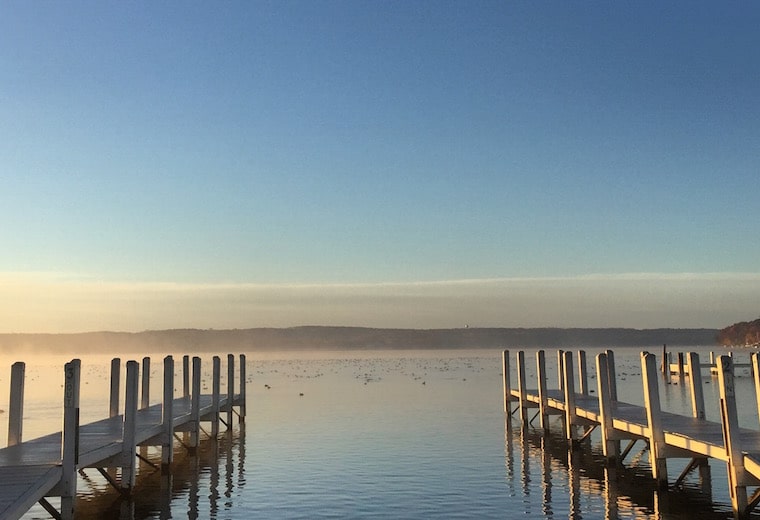
But even as we look back with a diminishing indifference at the past four years, I will not - no - we must not take our eye off the prize. I will not rest until every individual and family of means who has ever dreamed of sitting on a white pier surrounded by the glistening, pure waters of Geneva Lake captures that dream and basks in the lifestyle accomplishment that such a purchase delivers. Value exists in this market, but only for those who are steadfast in their search, and those who aim high and shoot straight. Without a Sherpa to guide this discerning one percent, how will they make it over that hill and into the promised land where milk and honey and clear streams flow?
One could sit in isolation and ponder this great nation of ours from coast to coast, awash in disbelief at the myriad vacation home options that are available to those who can afford to spend their weekends and their holidays in a different state of mind. From the frigid mountains, to the dusty prairies, to the oceans white with sodium induced foam, the plethora of options that exist are truly mind numbing. Other peoples might be lost in this sea of confusing options, but not us, not now. My friends and fellow Americans, for those willing to engage in analytical and emotional thought, there is no better vacation home option than that option that exists a mere 90 miles from the Chicago city center. A vacation home option so tantalizing close, yet a vacation home experience so enticingly unique.
The challenge facing us today is to identify value, and recognize the life shaping, future altering option that rests gently at our 53147 loving feet. If we take that first step, a step made no less bold by the obvious benefit it affords, our children and their children alike will one day hold us in the highest of places, and cherish our memory not for our smile, or for our good advise, but for our financial sacrifice than led them to these gentle shores. If we do this, our future will shine with the warm light of a cheerfully lit screened porch, and our evenings filled with the sound of rolling waves, not just for this summer and the following year, but for decades and generations beyond.
Thank you, and may God continue to bless Lake Geneva.
Jan 23, 2012 by
David |
Add comment
Last year, I went swimming earlier than I had intended to. Today, my last Blackberry and a very pristine pair of Ray Bans lay encased in a living tomb of zebra mussels about six feet West from the inside buoy that keeps my boat in place. That swim wasn't much fun but it did provide me with a very early start to the summer of 2011. That early start is one that aim to repeat in 2012, and in my own personal dedication to summer it is obvious to me that this is not a dedication shared by many.
Today my mind spins with thoughts of summer. It isn't warm today, but it isn't exactly cold either. The snow is melting, the ice is too, and spring just landed a quick right jab after absorbing many, many body blows last week from its frozen opponent. I haven't shared this publicly yet, but I do believe that February 12th is a very magical date for my fellow summer lovers. If the lake is not mostly shrouded by ice as of that date, it is unlikely the lake will ever significantly freeze. Sure Fontana Bay and Williams Bay and Geneva Bay will concede an early defeat as their shallowness provides them no other options. But if that date will come and go and large sections of open water still remain, this will be a harbinger of an early spring. And I will be overjoyed.
And what about spring? It is celebrated by some, but it is, in practice, completely and thoroughly ignored. Everyone looks forward to spring, but most let the opportunities of a young spring slip right through their hands. I'm talking about boating, and I'm talking about spring. Summer is indeed short, but if summer is preceded by an acknowledged spring, it isn't as short. I'm not only hinting that you should have your boat in the water by April 1st, as I'll do this year, though that would be commendable. Instead, I'm talking about May. May is a month that has warming temperatures, pale green leaves, later and later sunsets, and it is a month that most reading this will completely and thoroughly ignore. This needs some correcting, and if May is going to be fixed the repairs must begin in January. Like right now.
If May is going to become a month of leisure and be measured alongside July and June, though none can measure up to August, there are commitments that must be made. It is often said that September is the best month at Lake Geneva. This is true, but it's mostly thought of in that context because the lake is quieter and the traffic slighter. May is like this as well. Some of the best boating moments of my past year came during May, both on frosty early mornings and on warming late afternoons. May can provide this sort of experience, and in May you'll likely be one of a very small group indulging in such delights. I am not worried about losing my solitude on the lakefront, for even if you grasp at May I still have April.
If May is going to be dedicated to weekend leisure, April must be dedicated to the tidying bits that must be taken care of at any vacation home. There will be leaves to rake, or have raked. There will be maintenance issues to take care of, or have taken care of. There are many items that many homeowners put off until May, and if May will be splendid then these must be started and finished in April. This is the way it is. And if you do this, May can feature charcoal dinners on Saturday evenings at the lake, while your vacation home neighbors have yet to uncover their grill and sweep the leaves off the porch. This is one-upping the Joneses, Lake Geneva style.
For buyers, the art of a lake based May is not so easily accomplished. Many buyers look toward summer and place a date of June something in their minds. This is a great way to start out on the wrong foot. To close in May, or June, is to close at such a time that said buyer is welcoming a frantic summer schedule, one where deliveries occur and tradesman knock as often as towels are slung over the back of a porch chair to dry. This is not a great way to be introduced to a Lake Geneva summer. If that same buyer were to close in March, or perhaps April, there is a month or more to arrive upon a reasonable schedule. To develop a routine of what goes where and who likes what. In the establishment of a routine in April and the practice of that routine in May, then and only then can there be a seamless transition into June.
From my view today, summer does not look so far away. I have a windshield to replace on a boat, an engine to paint, and many screws to be put back in their appropriate place. In the spring, I do not want to be doing these things. Instead, I want to be chasing smallmouth around Conference Point, and throwing a fly into the mouth of Uhleins Creek. I want to be living in May, not preparing in it. Make your summer longer and better: Start it in May.
Jan 19, 2012 by
Admin |
Add comment
You have never contended with real wind unless you have lived in Steinbach, Manitoba. There is wind here, in my village and in your windy city, but this wind is but a gentle breeze compared with the wind that howls through this town in southern Manitoba that was named for a stony brook that long ago ran dry. Lake Geneva wind is varied. If it blows on a Tuesday it is exhausted by breakfast on Wednesday. Our wind has no stamina. The wind in Steinbach is always in action, blowing from the north or blowing from the south. Bringing with it an arctic blast from Saskatchewan or a thunderstorm from the plains of South Dakota. Wind blows from the West and heads to the East uninterrupted by any hill or stream or slight valley. The blowing never stops. It is, as you can imagine, annoying.
Wind leaves nothing undisturbed. If you have arranged an outside lunch, or dinner, and your table is set just so, wind isn't impressed. Wind will blow your table cloth up at the edges, it will knock over your wine glass, and it will push just hard enough to knock your cut flower arrangement onto its side, spilling water onto your lap. Wait for a mighty wind and then go play catch in the yard with a football, or a Frisbee. You'll find that this isn't fun either, not in the least. There are television shows on fishing and magazines on fishing that advise the fisher to find a windy point, and fight for position against the wind while fishing. They say this is where the fish will be. Me? I'll be on the other side of that point, in the calm water, content to catch nothing as long as I don't have to be subjected to the wind.
I have done much fly fishing over the past year, and I plan to do much more of it during this coming one. The problem with fly fishing is wind, well, wind and people walking behind you. If I could roam a beach or wade a flat, and do both of these things in the dead still of a windless day, I would appear capable. I would coax my fly further and further with each false cast, double hauling to push it further on the back cast and then much further on the release. In the wind I can barely keep the fly from hitting me in the head or hooking me in the shoulder. This is what the wind does. It also helps me sail, but that is typically the beginning and the end on my thin list of pros.
And so it is strange to be me today, to be cheering on the wind. The air temperature is eight degrees, the wind is howling from the north. If I were fishing on a day like today, I would curse the wind and hide around the Western tip of Conference Point, or to either side of Pebble Point. Wherever I would fish, I would find my way out of the wind and into the lee. But today I am not fishing. Not with a fly and not with a lure, I am not fishing at all. And I am not golfing, or throwing a football, and I am not setting up a picnic lunch. I am inside, with the furnace burning the bluest flame, and I can see the wind outside my office window but I cannot feel it. The wind today is not a foe, but it is a friend. It is the 1980s, I am the US, the wind is the Taliban, and the ice is the Soviet enemy.
All I want the wind to do today is blow. I want it to blow so hard and for so long that no one dare walk their dog on the street. I want it to blow so hard and so long that no dog asks for that walk. The wind today is a tenuous friend working hard and long to blow a heavy chop on the lake. This chop will keep the ice at bay, or at least in the bays, and no matter the temperature outside, the wind can keep our lake ice free. I shouldn't be like this. I should welcome the ice. I should enjoy the cleansing that it provides to Geneva Lake. Yesterday, Geneva Bay had considerable ice cover. It was fresh ice. It was beautiful, sort of. But it was suffocating at the same time. I saw despair when I looked at that icy cloak. I saw a delayed spring, and with it delayed boating and fishing and cruising.
I have sympathy for my ice boating friends. For the ice fishers too. But this isn't about you, it's about me. And today, I love the wind only because I hate the ice.
Jan 18, 2012 by
David |
Add comment
There is a strange feeling in the market this morning. It's not so strange on the selling side, as this always exists there, happily, contentiously, whatever the situation wherever the real estate, sellers feel it. Buyers used to feel it, back in the day. If you bought a house in 2004 it wasn't always because you wanted the house. Many times, you bought a house then because you knew that if you didn't, someone else would. The long forgotten feeling that I'm feeling this morning is just that- buyer competition.
New listings are hitting the market at a fevered pace these days, with
three new lakefront listings coming to market in just the past week. I brought the new lakefront at
560 Sauk in Fontana to the party, and I'm intent on showing her off to anyone that wants a peek. At $1.599MM, this lakefront is the second cheapest lakefront home on the market in Fontana. The only home with a lighter list price is on the North side of Fontana, and it features a big lot that is limited due to a stream that meanders through from the Lower Gardens down to the lake. I plan on catching rainbow trout in front of that stream in April, but that's another post.

My new lakefront is four bedrooms, two baths, and has a two car attached garage. If you're an entry level lakefront buyer, you know that finding a two car attached garage is not a typical discovery in that particular market. The lakefront is fairly level, with just a few steps and a slight slope to contend with when taking the delightful stroll from deck to pier and back again. The lakefront measures 45' in width which should be suitable for someone to engage in a rigorous renovation or addition, or even a tear down as is the trend that has made many Lake Geneva builders content with other people's recession.
Currently, there are at least three lakefront homes pending sale. Two in the 700 Club and the third on South Lakeshore in Fontana. I am insanely jealous that I am not involved in any of these transactions, so please do send your friends and family to me so that we might together right this imbalance. There is activity outside the lakefront as well, including a fresh pending sale in Lower Brookwood, and some quality new listings elsewhere. I just listed
cottage Q in Fontana's Belvidere Park- the first cottage there to see the light of the MLS in more than 20 years. This cottage is surprisingly large, with five bedrooms, two baths, a large kitchen flanked by a formal dining room, and both living and family rooms. While the home could use some renovating, it appears to be a suitable shell that could be transformed into a most impressive cottage at the lake. The proximity to the water is unparalleled, the views divine, the amble from front porch to white pier both delightful and swift. I will sell this cottage soon.

With a swelling inventory it is only normal to expect the existing inventory to adjust to the influx. Two side by side listings in Cedar Point Park are engaged in a pricing war, with one reduction prompting another. These are both primed to be bought in the low $1MMs (possibly, but who knows), and the lots are substantial in depth and the elevation not as steep as some at the severe southern point of Cedar Point. If I were a buyer, I'd call myself to talk about these two post haste. The same goes for the cheap Glenwood Springs lakefront and my new entry level lakefront on Sauk. If entry level buyers are active, they should be focusing on these properties before they are badly beaten to the punch. Buyers love to see sellers sweat. They love the competition that drives prices down, and they are right to love those things. But they may have forgotten about one nasty little aspect of a real estate market. Sometimes, buyers are in competition too.
Jan 16, 2012 by
David |
Add comment
Winter is good for a lot of things. Without winter, that red headed kid who snowboards would only be known as the red headed kid who skateboards. Without winter, flora and fauna would just grow and grow and grow, all year long. That's why they have 20' long pythons in south Florida now that will someday eat little Florida kids. It's true. Without winter, no one would ever leave the north, which would be unfair for the south, which would pose a geographic inequality that people would decry along with income inequality and the more important but less known and never protested intelligence inequality that tends to lead to the former. Without winter, that would be a key election issue this fall. But perhaps more importantly than those things is this thing: without winter, there would be no time to tinker with boats.
If you're going to tell me that summer is time for boat tinkering, you would expose your naivete. When boats need repair or replacing or refurbishing in summer, it is less a tinker and more a frantic race that is furiously maddening. This summer, if you must be proven wrong, please sit at a boat launch. No need to sit there all day, just a few minutes, perhaps 15, and those minutes will do. Within that time you'll discover that there is nothing tinkerish about a boat that will not start in July. On a sunny Saturday, with the sun lifting higher and the launch line drifting longer, there is no such thing as tinkering with a boat that will not start. There is loud swearing and profuse sweating and silent drives home while your kids weep in the backseat, but there is not tinkering.
In the winter, there is no rush. There is no line, no warm sun, no kids on the pier with their life vests on. In the absence of these things, there is room for tinkering. Why do you suppose the Chicago boat show was held this past weekend instead of another warmer weekend in July? Because July is a month for action, when no one has time to tinker or dream or to delay. In January, we have time.
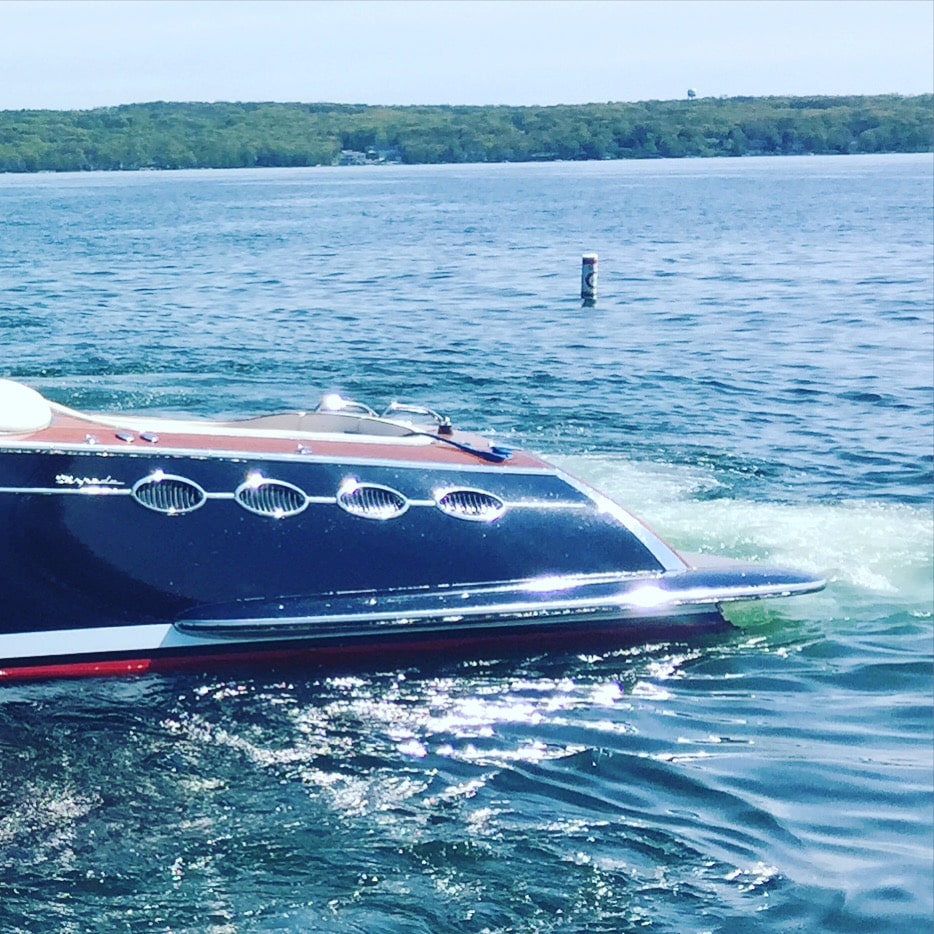
On the mantle in my family room, there are two pieces of teak. This wood might not be teak, but it looks like teak, which is to say it looks like wood. And since I put teak oil all over it, if it was not teak before, it is certainly teak now. That piece of teaked wood is the platform part of my swim platform from my boat. It was in sad shape when I bought the boat last spring, and over the summer I neglected it as much as did the previous owner. In December, I committed to do something about that situation, and I removed roughly seven thousand screws and bolts from my swim platform. The platform was then in pieces, several of them. I took the wood pieces home. I poured the screws and bolts into a large bag, and left the metal braces and rail at my office. Then I washed the dirty swim platform in TSP, dried it for days, then sanded it for many more. Soon after, I went to WestMarine and purchased some teak oil, and then I doused that platform in that oil. I did it again and again, and then I sanded it some more and ladled oil over it again.
When I was doing this, I was careful to leave the varnish rags no where near my home. Remember the big house in Geneva National that burned a few summer's ago? Varnish rags. I will not go down the same way. The teak platform has been transformed from a dull gray to a smooth shiny brown and now it glows from the top of that mantle. I might have been yelled at for sanding it down on the island in my kitchen, but this is the way tinkering is. It can inconvenience others, it can steal previously vacant spaces from garages and stain granite counters, but this isn't really about others. It's about a boat.
When you go to WestMarine, or Overton's, it's best to look like you know why you're there and what you're after. I do not look like this. I look confused, like I was left behind during a third grade field trip next door, and I wandered in looking for an adult who might call my mom. I walk the aisles anyway, intent on finding something that my boat needs. I usually don't know what it is it needs. I also regularly fail to bring in the faulty or ugly part that I'm looking to replace, instead resorting to a long winded explanation as to what the part looks like and what I think it is that it does, and then I hold my hands out to show the size of the part like I'm describing the catch that got away. I'm usually wrong. Do you have any idea how much a handful of shiny boat screws cost? Neither did I, but it was more than we both thought.
At my office now there is a desk covered in bits and pieces from my boat. I am a masterful remover of parts. I can unscrew just about anything. I am no good at screwing those parts back on, what am I, an engineer? But that's a project for February, not for January, so I won't jump ahead unnecessarily. I'll tinker this month. I'll drive to Westmarine to see what they have on sale, and then I'll drive home with that circular part and try my hardest to force it into its new square home. I can do all of this because it is winter. And in winter, I can tinker and no one will tell me I can't.
Jan 13, 2012 by
David |
New year, old year, activity on the lakefront remains. The day doesn't matter much. Snow or sunshine, 52 or 14, it's just the way it is. Denzel Washington keeps climbing around the top of this market, trying to make it stop, and yet it doesn't, and his daughters are horrified. It is a market operating smoothly but quickly, efficiently even, and another week or two has left us with another closing and another pending sale.
There are three homes in a line in Lake Geneva's 700 Club that have been active over the late fall and into this young winter. One of those homes has been listed for quite some time, the other two hit just this past fall. The tenured listing at $2.99MM is now under contract, as is the long ranch with a whole bunch of pleasing frontage priced similarly. One home in the middle- a newer home with fine finishes and an attractive design- remains the only one without a contract. It must be sad over that, eating ice cream late into the night, wondering how a market could be so cruel, so stupid.
Those two pending properties have shown yet again the preference of this market. The sweet spot in recent months has been in the $2.4MM to $2.75MM range. If buyers can find around 100' of frontage and a decent home in that range, they'll more quickly buy that home than they will almost anything else. I personally don't like one of the pending sales in the 700 Club. I think the house is a bit unwieldy and potentially more deserving of a back hoe than a bucket of paint. Alas, neither of these homes were my listings nor were the buyers mine. I may join the third, unsold home in a gallon or two of ice cream tonight in an attempt at drowning my sorrows in sweet, sweet calories.
Another home sold last week, that one on South Lakeshore in Fontana that had been pending for the latter half of 2011. The closing at $2.5MM for 81' of frontage may, at first, looks a bit top heavy. I assure you that it wasn't. I actually like this sale at $2.5MM, and would so much rather be the buyer of this home than the buyer of the home in the 700 Club at similar dollars. The frontage may be a touch slight for this level, but it was fairly level and the lot was deep and tree lined. The home was old, but classic, proof that wainscoting can never be applied in excess. The 81' in this case feels like a much larger parcel. Much of that open feeling is due to a vacant lot to the East of this now sold property, so perhaps that spacious feeling will fade when someone, someday, constructs a massive structure as owners of vacant properties on Geneva tend to do. For now, until then, this is a beautiful parcel and at $2.5MM, regardless of the price per foot that this price implies, it was a value.
The lakefront market will now begin building with inventory. Starting off the year with this much activity is momentous, and more sales now will likely mean more sales later. Inventory will grow, as it already has, though the market today still has several solid offerings that I think will sell over the first quarter of 2012. I see that cheap lakefront in Glenwood Springs and another one in Cedar Point, and I still see them both selling soon. I'll be upset when they do sell if they sell to anyone but a buyer of my own representing. Basswood will sell, as will one or two others, and by April 15th I can envision a scenario where we'll have had 6 lakefront closings as of that early date. The key now, if you're a buyer, is to get rolling and let me help you identify value. For every great listing on Geneva there are three ridiculous ones, and it's going to be a big help if you know which is which.
Jan 12, 2012 by
David |
Add comment
In light of the post from Tuesday, this might on the surface appear redundant. I struggle with redundancy here, as you already know. Monday: It's beautiful at Lake Geneva! Tuesday: It's still beautiful at Lake Geneva! And on and on it goes from here until eternity, this guy carrying the flag for a destination and proudly righting it four mornings a week. But the impact that foreclosures had on the Lake Geneva vacation home market during 2011 can not be diminished, even if the numbers were low, the pricing capitulation light, and the pain more reminiscent of a nail trimming than an amputation. The fate of the national market for 2012 might lie with the foreclosure, but not so in Lake Geneva.
During the year now past there were foreclosures. There were banks unwillingly transitioning from lender to owner, and perhaps fewer of them made this Jekyll and Hyde transformation in 2011 than did in 2010. I say perhaps, as the foreclosure scene at Lake Geneva is not an exact science. There is a criteria in our MLS descriptions that can be checked or left unchecked, to signal to the open market the state of the REO ownership. Many times, this criteria goes unchecked, and as such, relying on the MLS to produce highly accurate results is not a safe bet. Watching sheriff's sales and witnessing the ownership papers shift is also not the best way to monitor this segment of our market, as even when a bank becomes the unfortunate owner they will often take many, many months from owner to seller.
So how best to judge the ebb and flow of foreclosure and, in do so, take a relatively accurate temperature of a market? We'll have to gather up a broad range of factors, weigh them, squeeze them, massage them, and when the prodding is done, we will set them down and take several steps back and view them. The application of these oddities is in the reviewing of REO inventory, both active and sold, scanning for short sale activity, watching lis pendens filings, and reviewing scheduled sheriff's sales. If one can do this, then a complete understanding of the 2011 Lake Geneva foreclosure scene will yours.
Or ours, as is this case. During 2011, there were foreclosures in Wooddale, Indian Hills, Country Club Estates, and Cedar Point Park. Abbey Springs had one or three, and in our vacation home market, Geneva National had the most. As I have pointed out before, it would be unfair to consider Geneva National on even par with an association like Indian Hills. If Geneva National has 20 foreclosures in a year (no idea if that is accurate), and Indian Hills has three, who wins? Likely the winner in that exchange is GN, as the bulk of existing inventory can more easily absorb that fairly light ratio of foreclosures. It's not the number of foreclosures in a development, it's that number figured against the size of the development. It's like the size of a ship versus the motion of the ocean. It's just like that except entirely different.
There are active REO listings on the market in Indian Hills, Country Club Estates, and soon there will be one in Wooddale. The Wooddale foreclosure is an interesting one. That property hit the market during 2011 and did its absolute best to wriggle off the hook. It was listed and then reduced, and then reduced again. And then it became a short sale offering and the price dropped further. Then more. And ultimately no buyers paid any attention. That home is, rumor has it, being purchased by an investor direct from the bank, and will return to market in 2011 as a refurbished property. Pay special attention to that. Many believe that the way out of the foreclosure crisis is to somehow incentivize primary home buyers to purchase REO properties. I've thought since day one that the investors were the answer. I'll end up being right, which is a burden.
I'm wracking my brain to think of any lakefront foreclosures from 2011. There is one pending now in Geneva Manor, a possibility that appears owed to an unfortunate circumstance. There is one foreclosed property in Bay Shore on the Williams Bay lakefront that should be hitting the open market soon, and there have been foreclosure rumblings that may or may not still be in the works at Vista Del Lago and in The Fontana Club. Another lesson we learned in 2011 is not to trust the lis pendens filings as a purely accurate foreclosure indicator. Many owners will succumb to default in order to obtain a loan modification. This is a bad idea, as negative equity is not cured by a half a per cent reduction in a borrower's rate. Crain's Shia Kapos (whom I love) had a story a while back about some guy who has a brilliant "solution" to the housing crisis. It's simple, he says, all it's going to take is for the banks to write down the balances of outstanding notes. Genius! So all we need to do is to take one person's loss and spread it out to the shareholders of the bank? This is a bad idea, bordering on the criminally stupid.
For all of the illiquidity of recent years, the South Shore Club has still had just two foreclosures. One was of the vacant lot that I sold last spring, the other of the home immediately to the East of that lot back in 2010. These two foreclosures are not a positive, but the strength of the ownership there in light of slow sales should be viewed from the outside as a sign of stability here. The same applause is due the lakefront condo market- a market suffering from a severe lack of volume. Owners in this segment have stayed strong in their resolve, and this market has been buoyed as a result. One lakefront foreclosure in Bay Shore and rumors of others elsewhere does not create a crisis.
Look forward to a 2012 that is going to look almost exactly like 2011 in this regard. Foreclosures are going to be a visible portion of any individual market for years and years to come, so we best get used to their existence. There will be more defaults moving forward, and some will ultimately be on the lakefront. Keep in mind that a few foreclosures here and there does little but spur more volume in a narrow market, and those few sales cannot drag on a market like an inundation of sales would. Geneva will remain strong, a fortress girded against foreclosure in most any form, and we will be grateful for it.
Jan 10, 2012 by
David |
Add comment
I'm going to assume that Jack Welch is smarter than I am. This is not an easy admission to make. It's this assumption of superior intelligence that left me bothered after hearing him spouting on and on about a massive housing recovery coming to a town near you in 2012. Jack argued his point based on diminishing supplies and improved employment statistics, and these, in themselves, are nice little points. If those two factors existed in a vacuum, Jack would be onto something. Unfortunately, there are other factors at work that will cause the housing market to remain stuck during 2012, and perhaps the most powerful negative force on the market will not be something tangible, it will be psychological.
On a National, perhaps global level, housing has lost much of its luster. In the minds of many, the crown jewel of achievement is now viewed not as a precious stone but a weighty boulder. This jewel has become a noose around so many necks, and housing, both in application and in perception, has changed. As a society we no longer view housing as a stable place that will hold its value and routinely outpace our other paper investments. No matter that some markets, like Lake Geneva, have remained remarkably stable throughout this recent tumult, the perception is the same. Real estate is less a safe haven and more a risky venture. Gains or losses will mount, but a perception of stability, built on the backs of generations of returns, has vanished.
Jack is looking to the facts, and those facts will likely lead some sort of housing renaissance this year, but they will not lead a blowout recovery. If the jobless rate drops, this is obviously a positive for business and in turn, for housing. But is it really? If you've been out of work for a year, living on reserves or the kindness of taxpayers, and you finally secure a job, what then? Report to work on a Monday, lunch with the boss on Tuesday, home shopping on Wednesday, move into the new house 30 days later? Doubtful. Instead, those long term unemployed are going to be gun shy to the point of paralysis. If income has been absent for a long while and it finally shows itself, will someone immediately set about entering into a long term indebted relationship with a bank that they don't trust to secure a home that they don't trust in a job environment that will be tenuous at best?
An improvement in the jobless rate will be tremendous, but spark an immediate housing revival it will not. If inventory dries up, as it has been, what exactly does that mean? Does that mean people are content in their homes and they wish to stay put long term? Or does it simply mean that most long term sellers have given up their hopes of selling and are, in effect, resigned to their own deeded fate? The answer unfortunately is the latter, and any resurgence in home sales will likely lead to increased inventory as sellers take note of a slightly improved housing environment and attempt to sell what they've long wanted to sell. This inventory build will have a negative impact as the amount of sellers returning to the market will far outweigh the number of buyers doing the same.
By some estimates, there have been more than four million foreclosures in the US since the beginning of 2006. The market tends to look at the inventory of REO properties generated by that exodus of owners, but more detrimental to the future health of the market are those four million ex-property owners. Without knowing the statistics, we can still consider the impact of four to eight million citizens who had previously been pro-housing. This large chunk of our population will be forced to sit on the sidelines for several years as they repair their credit and lick their emotional and societal wounds. These foreclosed on individuals were not housing pessimists- they were optimists- and now many will view housing as the instrument that destroyed their finances if not their lives. Is this a demographic who will lead a housing recovery? No. It is instead a group who will be long term tenants, either through choice or necessity, and they will trickle back to home ownership much more slowly than pundits like Jack might believe.
The last group who is lagging and who just may find a way to miss out on the most profound housing opportunities in decades is whatever they've labeled this current generation. I think I'm Generation X, but the Baby Boomers are the only ones who got a cool name tag and left all other labels unmemorable. Whatever their name, the current generation of mid-twenty somethings are poised to miss out on an unprecedented opportunity to pursue value and establish equity much more quickly than any recent generation. The problem here is that this generation suffers from not only a trimmed down job market but also a heavy dose of skepticism. Many view housing as the vehicle that broke their parents or their aunts and uncles, and they'll be damned if they're going to fall for the same "tricks" that their parents fell for. This distrust of the market will be a benefit to some who might lack the intelligence to pursue actual value, but for others, this hesitation will be a curse that will lead to a severe equity gap for this generation- an equity gap that will be of their own choosing.
There is light at the end of this tunnel, but this should serve to temper some of the robust numbers that pundits like Jack Welch and economists like Larry Yun are spewing. The markets will improve in 2012, there is little doubt. A change in administration this fall could signal the start of a relative bull market for 2013, but 2012 will be a year that will look much like 2011. Housing will improve, ever be it so slowly. Case Schiller will tell us that certain markets have improved and others have declined further, but these movements will be measured in single, barely readable percentage points. The large swings of volatility should be over, and a slow return to stability will be inevitable. The real obstacle to a real estate blowout isn't unemployment or interest rates or inventory, it's the American psyche. Are we ready to trust housing again? Probably not. Yet.
(Disclosure time- Geopolitical events that might roil stock indexes during certain points of 2012 will obviously put a damper on improvements in the housing market.)